If you work in tech, your own .id.au domain just makes sense
There is a small part of Australia’s domain-name system that I think is almost perfect for anyone building a professional identity online — and particularly for people starting or developing a career in technology.
It is .id.au.
Most Australians recognise .com.au as a business address and .org.au as the home of a charity or not-for-profit. Both have a clear purpose. A .id.au domain has one too: it belongs to an individual.
That is why nickosullivan.id.au has always made sense to me. It is not the name of a company, product or temporary project. It is attached to me.
A domain that says who you are
The current auDA licensing rules reserve .id.au for natural people. The name must match your legal name, first name or family name, an abbreviation or acronym of it, or a nickname.
That gives the namespace a clarity most newer domain extensions do not have. A .tech address tells me something about a topic. A .me address suggests a personal site. An .id.au address tells me this is an Australian individual’s place online.
Depending on what is available and what matches you, that might look like:
janesmith.id.aujsmith.id.aujane.id.au- a recognised nickname followed by
.id.au
It is a small distinction, but it works. Your name becomes the address.
It looks good on a résumé
If I am reviewing two early-career IT applications and one candidate includes a personal domain with a small, well-maintained portfolio, I am going to look.
It does not need to be an elaborate website. A useful personal site could contain:
- a short professional introduction;
- projects you have completed;
- a home lab diagram;
- technical notes or lessons learned;
- links to GitHub, LinkedIn or certifications;
- a downloadable résumé; and
- a reliable way to contact you.
The site itself demonstrates something before I have read a word. You registered a domain, configured DNS, arranged hosting, published content and kept it working. For someone applying for IT support, systems, networking, cloud, security or development work, that is practical evidence of curiosity and follow-through.
There is also a difference between adding github.com/username to a résumé and giving someone a place you have deliberately put together. GitHub shows the work. Your own domain can explain why you did it, what went wrong, what you learned and where you are heading next.
The email address is half the fun
Then there is email.
[email protected] looks excellent on a résumé or business card. It also makes for a wonderfully unnecessary but very cool detail on a card you hand to a friend.
You are not restricted to me@, either. A personal domain lets you use addresses such as:
More importantly, the address can outlive the email provider behind it. You can move from one mailbox host to another and keep the address people already know. The domain becomes the stable part; Google Workspace, Microsoft 365, Fastmail, email forwarding or another service can change behind it.
A domain registration does not automatically include a full mailbox, and the hosting still needs to be configured properly. SPF, DKIM and DMARC matter if you want mail to arrive reliably and stop other people spoofing your address. But owning the domain gives you control of that decision instead of building your professional address permanently on one free provider.
One criticism in a long-running Whirlpool discussion about .id.au is fair: the extension is obscure enough that some people think they have misheard it when you say the address aloud. Another contributor mentioned falling back to a Gmail address for Google Drive sharing.
That obscurity is real. I have had to repeat the “ID dot AU” part too. It is also manageable. A custom-domain address can be connected to a Google account, and paid Google Workspace and Microsoft 365 services both support custom domains. For me, having an address that is genuinely mine is worth occasionally spelling it twice.
My domain became more than a portfolio
I did not end up using nickosullivan.id.au as a static digital résumé. It became the umbrella for quite a few different parts of my online life.
This site is where I write about technology leadership, cyber security, infrastructure and what is happening around North Queensland. My personal blog is where I keep the less formal side of life: family, faith, travel, projects and whatever else I happen to be learning along the way.
One of the better examples is a 2021 post about servicing my Hyundai Getz. It is not part of a carefully designed technology portfolio. It is simply a practical account of something I worked through, including the fuel-filter mistake that took four attempts and turned out to be a missing O-ring.
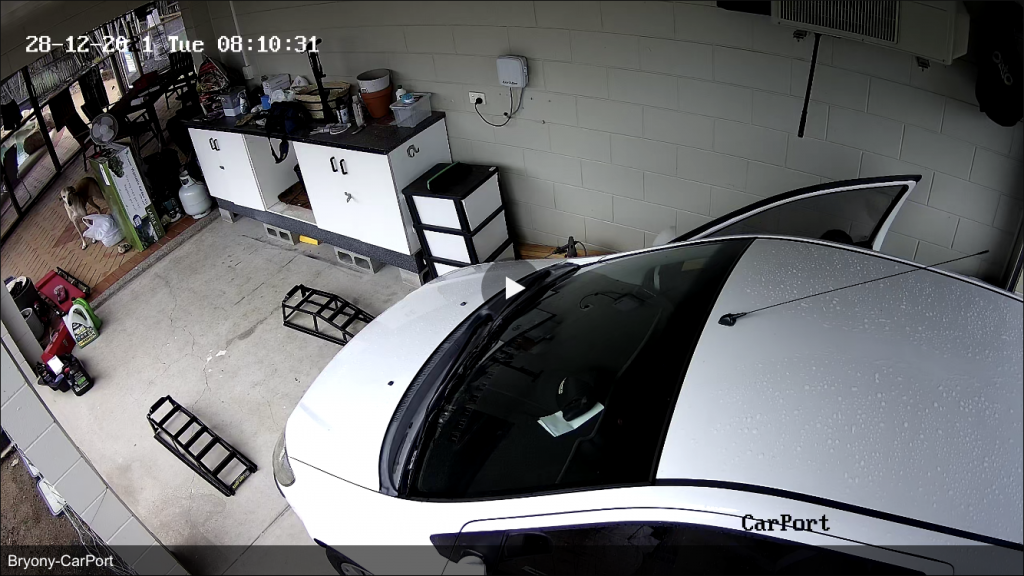 A personal domain does not have to contain only polished career material. My Hyundai Getz service post still attracts readers years later.
That is what I like about owning the domain. It can hold the polished professional material and the ordinary stories. Both say something about how you think, solve problems and explain things to other people.
The portfolio might help with a job application today. A useful technical or practical post might still be helping a stranger through a search result five years from now.
.com.au, .org.au and .id.au each have a job
I do not think .id.au replaces the other Australian namespaces.
Under the current auDA rules, .com.au and .net.au are for commercial entities. They make sense for a business, sole trader, product or commercial service. .org.au is restricted to eligible not-for-profit entities. It makes sense for a charity, association or community organisation.
.id.au is the personal layer. It is for your name, your public identity and the work you want associated with you as an individual.
That distinction can be useful if you later start a business. The business can have its own .com.au, branding and shared addresses while your .id.au remains the home of your professional history and personal writing. Jobs change. Employers change. Projects are renamed. Your name is the thread running through them.
The rules prohibit domain-name monetisation in .id.au — essentially registering names to park, sell or trade them — and the name must remain connected to the person holding it. That is consistent with the point of the namespace: it is meant to identify you, not become speculative inventory.
It costs less than almost any other professional-development expense
This is not an expensive exercise. At the time of writing, VentraIP lists .id.au registration and renewal at $17.95 per year. Prices vary between registrars and can change, but even at ordinary renewal pricing it is a very small annual cost for an address you can keep using across your website and email.
Hosting can also be minimal. A static site on GitHub Pages, Cloudflare Pages or a similar platform can cost nothing beyond the domain. If you are learning, that setup is part of the value.
I am a VentraIP customer and have used them for domain registration, but I have no role in or direct affiliation with the company. They regularly run domain promotions and their current .id.au pricing is straightforward.
Referral disclosure: this VentraIP link is my referral link. I may receive a referral benefit if you use it. You are under no obligation to do so, and you should compare registrars, renewal prices and included services before choosing one.
If you are in tech, take it one level further
Registering the domain is the easy part. The fun is deciding what to do with it.
Start with a one-page portfolio. Add a project write-up. Connect an email address. Publish notes from something you built in your home lab. Host the site from a Git repository and automate its deployment. Set up subdomains for documentation or experiments.
If you really want the next-level home-lab project, you could explore running your own mail server with Mailcow or Mailu. I would treat that as a learning exercise before making it the only home of an address printed on your résumé. Modern email delivery involves reputation, reverse DNS, spam filtering, TLS, monitoring, backups and ongoing security work. Self-hosting mail is satisfying precisely because it teaches you how much a reliable hosted mailbox quietly does.
You do not need any of that complexity to get started. A registered name, a simple page and an email forward are enough to establish the address. Everything else can grow behind it as your skills do.
A little-known domain is still a good one
.id.au has been around for decades and is still far less recognised than .com.au. The 2018 Whirlpool discussion called it neglected, and an older Domain Registration article made much the same observation years earlier.
Perhaps that is part of the opportunity. Names and useful abbreviations may still be available, the price is modest, and the extension immediately sets a personal site apart from another profile on a platform someone else controls.
For a student, graduate, technician, engineer, administrator, developer or security professional, owning a small piece of the Australian internet under your own name just makes sense.
Put it on the résumé. Put it on a card. Give it to a friend. Write something useful there.
And yes, occasionally explain that it really is “dot ID dot AU”.