The problem with being called Nick in Townsville
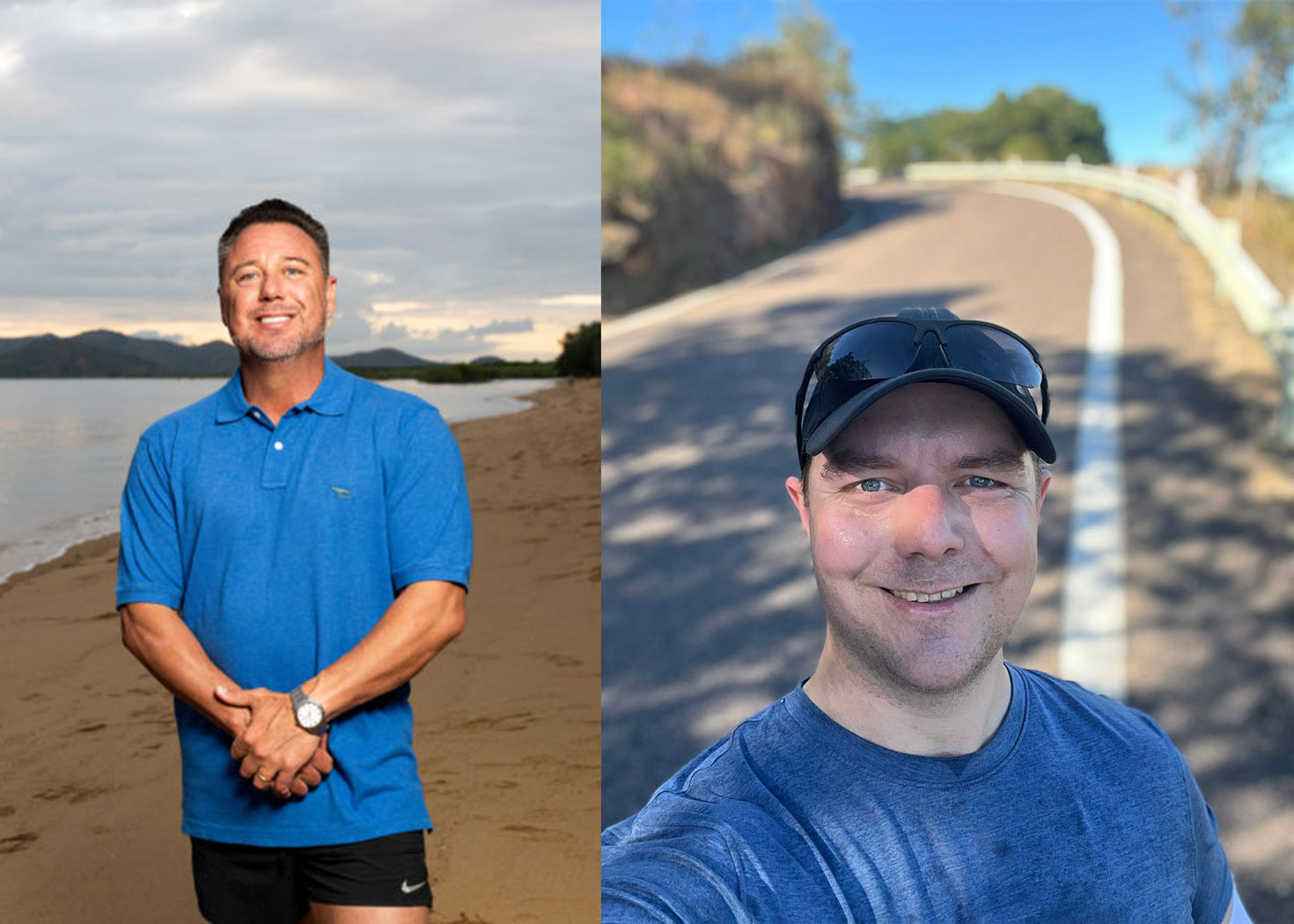
Header image: Nick Dametto (left) and Nicholas “Nick” O’Sullivan (right). Nick Dametto image source: nickdametto.com.
I discovered an amusing problem while working on this website.
Search for Nick Townsville and Google does not think of me. It thinks of Mayor Nick Dametto.
And, frankly, Google has a pretty good argument.
I own nickosullivan.id.au. I have spent years working in information technology around Townsville, and lately I have been putting more effort into making this site a useful account of who I am professionally. It covers infrastructure, cyber security, education technology, North Queensland incidents and the local technology community.
I am Nicholas O’Sullivan, usually Nick. Surely that ought to be enough to give me some connection with a search for Nick in Townsville?
Not quite.
That search prompted a more interesting question than how to rank for two words: how does a search engine work out which Nick somebody means? This article is my attempt to understand that question, and it has now become part of the experiment itself.
To be fair, Google has a point
Nick Dametto is the Mayor of Townsville. He is a former state MP, a public figure and the subject of regular coverage by Townsville City Council, news organisations, community groups and other websites.
His personal website, nickdametto.com, is an interesting older snapshot of that identity. Its homepage still introduces him as the State Member for Hinchinbrook and reports an August 2024 modification date, so it predates his move into the Mayor’s office. Even without reflecting his current role, the site adds another long-standing connection between Nick Dametto and North Queensland.
Each of those pages reinforces the same association: Nick Dametto, Mayor of Townsville.
My own situation is much quieter. I am an IT professional, not an elected official. My name appears on this website, LinkedIn, GitHub and a handful of project or community pages, but the relationship between Nick O’Sullivan and Townsville has not been repeated across the web at anything like the same scale.
So when Google encounters the fairly ambiguous search Nick Townsville, the prominent local Nick is a sensible answer. This is not really a competition between two people. It is a demonstration of how much context surrounds one name and how little surrounds another.
A name is only the beginning
Humans solve this kind of ambiguity through context without thinking much about it.
If somebody at Townsville City Council says “Nick”, they may well mean the Mayor. If somebody in my workplace says it, they probably mean me. If an old customer mentions Nick from Townsville Computer Man, that is also me. The word stays the same while the surrounding relationships identify the person.
Search engines need context too. A personal domain helps, but nickosullivan.id.au alone does not explain everything. A site can consistently say that:
- Nicholas O’Sullivan and Nick O’Sullivan are the same person;
- I am based in Townsville, North Queensland;
- my professional field is information technology;
- I write about IT infrastructure, education technology and cybersecurity; and
- my articles and external profiles all refer back to the same identity.
One part of the domain setup that I particularly like is that I also own nicholasosullivan.id.au. Rather than hosting a second copy of the site, I use Cloudflare’s alias-domain redirect tooling to return a 301 Moved Permanently response and send visitors to nickosullivan.id.au, preserving the path and query string along the way. The canonical domain then takes them to www.nickosullivan.id.au.
It is a small but pretty cool piece of the setup. Someone who tries the full version of my name still reaches the right place, while browsers and search engines are told that there is one permanent home for the site rather than two competing copies.
No single line acts like a magic instruction to Google. The useful part is the consistency between the homepage, my About page, article bylines, structured data, internal links and legitimate profiles elsewhere.
What I am changing
The first change is simple: this site needs to introduce me the way people actually know me.
“Nicholas O’Sullivan” is accurate, but I normally answer to Nick. The homepage now says that directly and places my name beside my location and professional focus. The About page does the same in more detail, using Nicholas “Nick” O’Sullivan as a clear bridge between the formal and familiar versions of my name.
Behind the page, I am also using structured data to describe one consistent person. The technical label is ProfilePage: machine-readable information that identifies the person a page is about, their alternate name, profile image, description and related work. Every article can then point its author information back to that same person.
Structured data is not a ranking button. It does not entitle a page to a particular result, and it cannot substitute for a useful website. Its value is clarity: the visible page and the machine-readable description should tell the same honest story.
The larger change is to keep writing things that make sense for someone genuinely involved in technology in this region. The North Queensland Cyber Watch series covers incidents that affect organisations and people here. I have written about digital inclusion in North Queensland, cyber security work in Townsville and the history of local computer stores.
Those articles are useful in their own right. Together, they also establish a natural relationship between Nicholas O’Sullivan, Nick O’Sullivan, Townsville, IT and cyber security.
What I am not doing
I am not going to publish twenty near-identical pages repeating “Townsville IT” or insert my name into sentences where it does not belong. That would make the site worse for people and would miss the point of the exercise.
Google’s own SEO guidance is refreshingly unexciting: create useful original content, organise it clearly, use descriptive titles and headings, and write naturally. It also explicitly warns against keyword stuffing.
Nor am I trying to borrow Mayor Nick Dametto’s prominence. He is the amusing catalyst for the story, not a subject to exploit. The official pages about him deserve to rank for his name and office. My task is to make my own identity unambiguous enough that Google can recognise a different Nick when a search becomes more specific.
Search results are not the whole person
There was an uncomfortable bit of timing while I was working on this experiment. On 27 August 2026, the Townsville Bulletin reported that Queensland Police had issued Mayor Dametto a $1,036 public-nuisance infringement notice over an incident at a licensed venue on Magnetic Island. The report also made clear that no criminal charges were laid and the fine does not constitute a criminal offence.
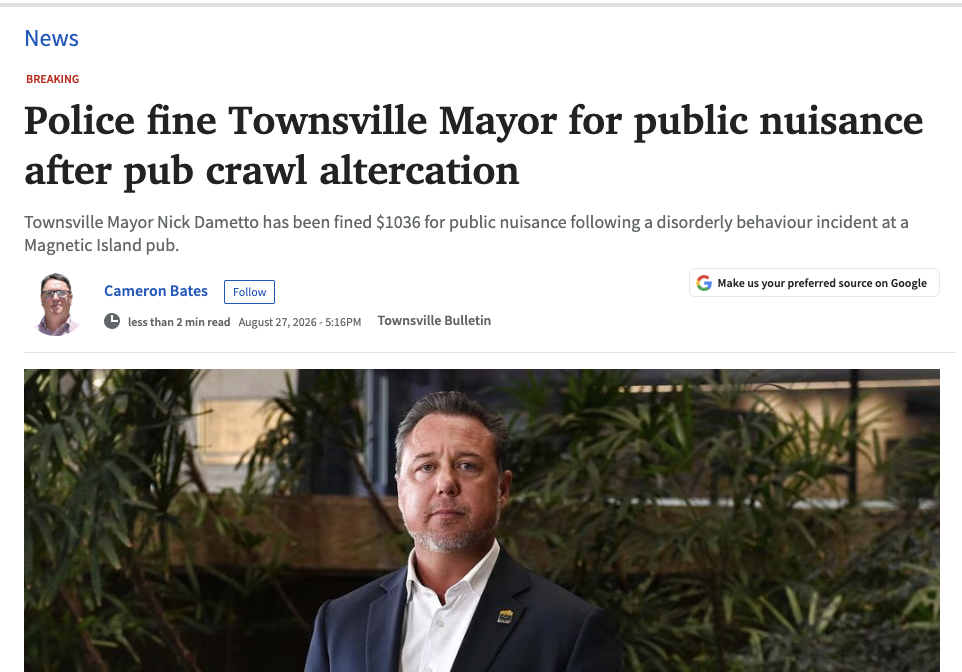 *Townsville Bulletin* article by Cameron Bates, published 27 August 2026. Read the original report.
I do not want to turn someone else’s difficult headline into an SEO opportunity or a judgment about his character. We all have our own problems, and all of us sometimes get things wrong. The difference is that people in public life can have their worst moments reported, indexed and associated with their name, while most of us are fortunate enough to work through ours away from that level of attention.
That is also part of why I eventually wrote my testimony. It includes poor decisions, anger, illness and seasons when life did not go to plan—not because those moments are the whole story, but because grace, growth and God’s faithfulness matter precisely because none of us is perfect. If I hope people will read my life with that perspective, I should extend the same generosity to somebody else.
This does not change the point of the experiment. It strengthens it: a search result can tell us what happened publicly and recently, but it cannot tell us the whole person.
How I will know whether it is working
Becoming the first result for Nick Townsville would make a funny ending, but it is not the only useful measure—and it may not be the most realistic one.
The earlier milestones are more specific searches:
- Nicholas O’Sullivan;
- Nick O’Sullivan;
- Nicholas O’Sullivan Townsville;
- Nick O’Sullivan Townsville; and
- Townsville IT Nick.
I will watch those in Google Search Console over the coming months, along with whether this site begins to appear at all for the broader search. Search changes take time to crawl and process, so I am treating this as a three-to-six-month experiment rather than rewriting the page every few days.
The genuinely useful outcome is bigger than one position. I want somebody who hears my name through work, a Townsville technology event or a community project to be able to find the right Nick, understand what I do and follow the writing or project that brought them here.
That is what personal SEO ought to achieve: not internet fame, just a clear trail to the right person.
So, Nick Dametto, I’m not actually trying to take your spot.
I’m just trying to convince Google that Townsville has room for more than one Nick.
12 September 2026: The experiment has taken a detour. Searching for the full version of my name led to Nicholas Townsville: now I’m competing with a brewery. There has been little movement for “Nick Townsville” so far; a fuller progress update is still to come.
27 September 2026: The first month of search progress now has screenshots and 28 days of Search Console data: a first-page appearance for “Nicholas Townsville”, a second-page appearance for “Nick Townsville” in my checks, and inclusion in an AI Overview.